
Please Choose Your Language


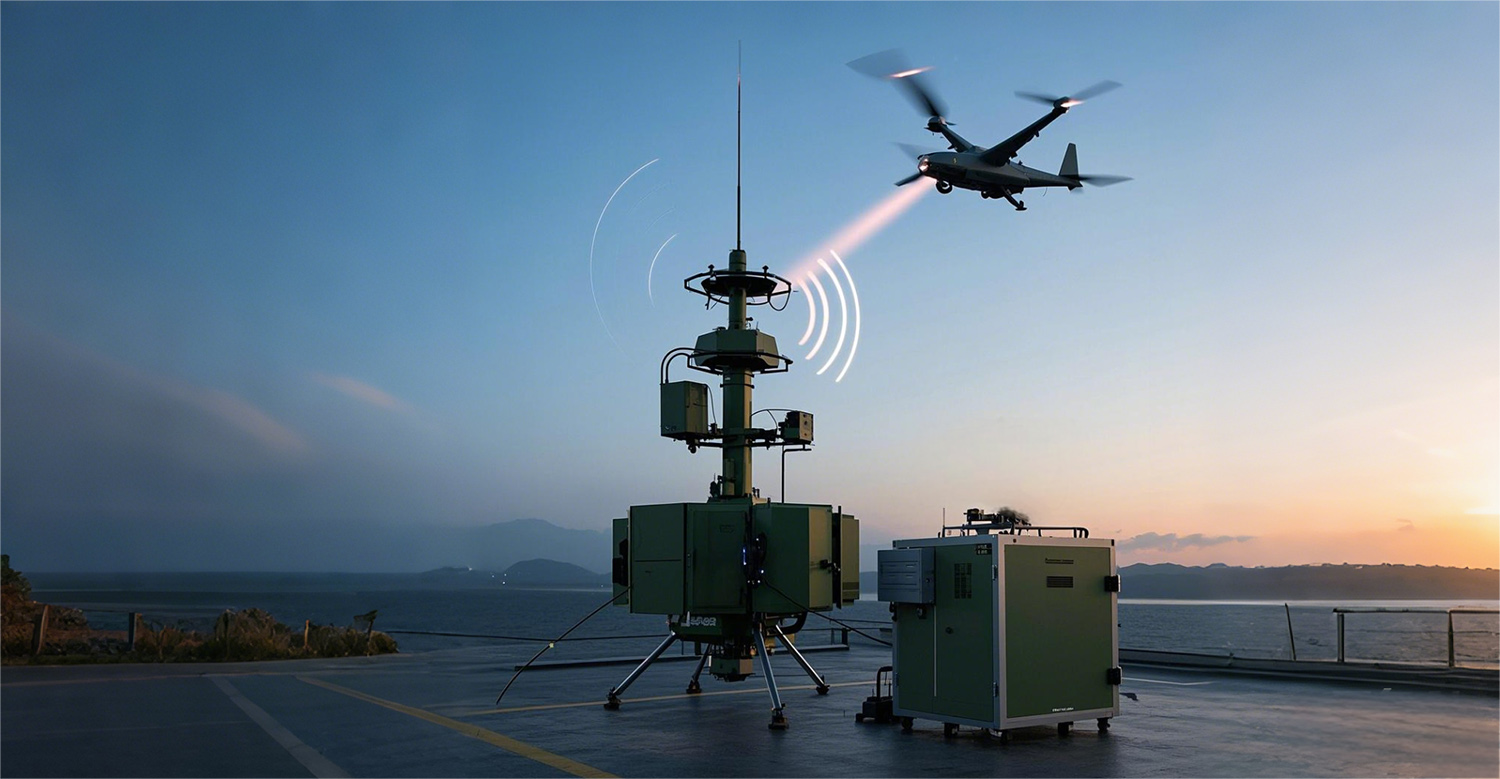
As for the 'SJ-SJSJA3000' anti-aircraft system, anti-vehicle detection equipment has been assembled and can be quickly installed. The detection unit in the equipment uses radio detection techniques to identify, identify and locate signals launched by drones from above, below or in the distance, and data mapping signals, in order to detect and provide early warning about these drones. Jamming elements force drones to land or return by emitting electromagnetic waves to interrupt navigational signals via satellites or cut off communication links between drones and remote control devices.
One witness
It works as a counter detector. The vast majority of conventional expendable aircraft, some non-conventional aircraft, fixed-wing aircraft and transient aircraft, can be identified in the 00MHZ-6GHZ frequency range, allowing jamming signals to be triggered automatically when a target is identified.
Strong counter ability
Digital turbidity sources support FSK, BPSK, QPSK, QPSK, QAM, 16QAM,
Transmit multi-modulated signals such as 64QAM and OFDM to effectively respond to all types of consumer and non-traditional drones; The power of each sector exceeds 100 megawatts, which ensures a high ability to resist new aircraft capable of resisting interference.
Software definition of frequency jamming
Interference ability in the frequency range of 300MHZ-6GHZ, while the interference equipment can real-time model the UAV normal frequencies, jamming scanning cycles, signal source patterns, and interference time lengths.
Active heat dissipation design
Ensure equipment efficiency and reliability by adopting proactive heat and cryogenic design
Frequency range coverage: 300 MHz to 6 GHz
Detection range: 360°
Radius: (3KB (empty environment, 0.1s drone launch ability))
Jamming Frequency Range: Jamming outputs can be inserted in the frequency range 300MHZ to 6GHZ as applicable
Interference distance: (3 kg (0.1 s radiation source))
Lean ratio: 10:1
Interference plane direction:: 360° Space direction: -90°~90°


